Interactive Notebooks: Marimo#
Marimo is a new take on notebooks that solves some headaches of Jupyter. It runs cells reactively - when you change one cell, all dependent cells update automatically, just like a spreadsheet.
Marimo’s cells can’t be run out of order. This makes Marimo more reproducible and easier to debug, but requires a mental shift from the Jupyter/Colab way of working.
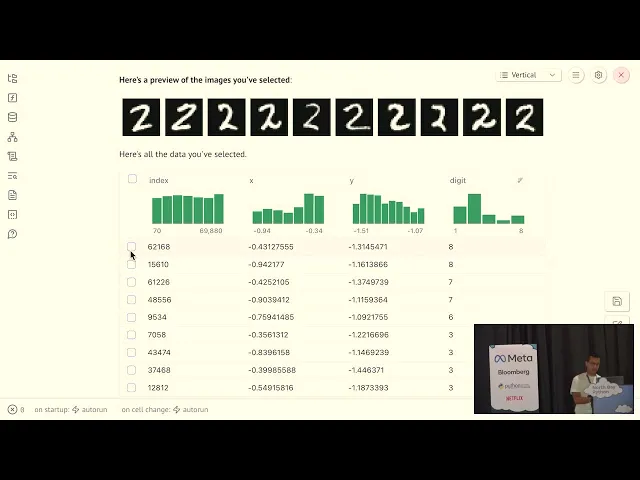
It also runs Python directly in the browser and is quite interactive. Browse the gallery of examples. With a wide variety of interactive widgets, It’s growing popular as an alternative to Streamlit for building data science web apps.
Common Operations:
# Create new notebook
uvx marimo new

# Run notebook server
uvx marimo edit notebook.py

# Export to HTML
uvx marimo export notebook.py
Best Practices:
Cell Dependencies
- Keep cells focused and atomic
- Use clear variable names
- Document data flow between cells
Interactive Elements
import marimo as mo

# Add interactive widget
slider = mo.ui.slider(1, 100)
# Create dynamic Markdown
mo.md(f"{slider} {'🟢' * slider.value}")
Version Control
- Keep notebooks as Python files
- Use Git to track changes
- Publish on marimo.app for collaboration