Pydantic & Structured Output#

LLMs return free-form text. Your application needs typed, validated data. Instructor is the bridge — it wraps any LLM client and guarantees structured, validated Pydantic output with automatic retry on failure.
Why this matters
Without structured output, you write brittle regex parsers that break on every model update. With Instructor + Pydantic, you define a schema once and the LLM fills it.
Installation#
uv add instructor anthropic openai pydanticThe Core Pattern#
import instructor
import anthropic
from pydantic import BaseModel

# 1. Define your schema
class Movie(BaseModel):
    title: str
    year: int
    director: str
    genre: str
    rating: float  # 0.0 - 10.0

# 2. Patch the client with instructor
client = instructor.from_anthropic(anthropic.Anthropic())

# 3. Call with response_model — get typed output back
movie = client.messages.create(
    model="claude-sonnet-4-6",
    max_tokens=256,
    messages=[{
        "role": "user",
        "content": "Extract movie info: Interstellar (2014) directed by Christopher Nolan, sci-fi, rated 8.6"
    }],
    response_model=Movie,  # ← the magic
)

print(movie.title)     # "Interstellar"
print(movie.year)      # 2014  (int, not string!)
print(movie.rating)    # 8.6   (float, not string!)
print(type(movie))     # <class 'Movie'>
No JSON parsing. No regex. No int(response.split("year:")[1]). Just typed Python objects.
Multi-Provider Support#
import instructor
import anthropic
import openai
from openai import OpenAI

# Anthropic
client_claude = instructor.from_anthropic(anthropic.Anthropic())

# OpenAI
client_gpt = instructor.from_openai(OpenAI())

# Ollama (local, free)
client_ollama = instructor.from_openai(
    OpenAI(base_url="http://localhost:11434/v1", api_key="ollama")
)

# Gemini via OpenAI-compatible endpoint
client_gemini = instructor.from_openai(
    OpenAI(
        api_key="your-gemini-key",
        base_url="https://generativelanguage.googleapis.com/v1beta/openai/"
    )
)

# All use the SAME code pattern:
def extract(client, text: str, model_name: str) -> Movie:
    return client.messages.create(  # or chat.completions.create for OpenAI
        model=model_name,
        max_tokens=256,
        messages=[{"role": "user", "content": f"Extract: {text}"}],
        response_model=Movie,
    )
Pydantic Validators for Extraction#
Add validation rules that automatically trigger LLM retries when violated:
from pydantic import BaseModel, Field, field_validator, model_validator
from typing import Optional
import re

class StudentInfo(BaseModel):
    name: str = Field(description="Full name of the student")
    roll_number: str = Field(description="Roll number in format: XX00X0000 e.g. CS21B1001")
    cgpa: float = Field(ge=0.0, le=10.0, description="CGPA between 0 and 10")
    email: str = Field(description="Must be an IITM email")
    year: int = Field(ge=1, le=4)
    courses: list[str] = Field(min_length=1, max_length=8)

    @field_validator("roll_number")
    @classmethod
    def validate_roll_number(cls, v: str) -> str:
        pattern = r"^[A-Z]{2}\d{2}[A-Z]\d{4}$"
        if not re.match(pattern, v):
            raise ValueError(f"Invalid roll number: {v}. Must match CS21B1001 format.")
        return v.upper()

    @field_validator("email")
    @classmethod
    def validate_iitm_email(cls, v: str) -> str:
        if not v.endswith("@ds.study.iitm.ac.in"):
            raise ValueError(f"Email must be @ds.study.iitm.ac.in, got {v}")
        return v.lower()

    @model_validator(mode="after")
    def validate_year_matches_roll(self) -> "StudentInfo":
        # Roll number encodes year: CS21B1001 → joined 2021
        year_digit = int(self.roll_number[2:4])
        # Current year 2026, so first year = 2025 batch → year_digit=25
        expected_year = 2026 - (year_digit - 21) - 3  # rough check
        return self

# Instructor retries automatically when validators fail!
client = instructor.from_anthropic(anthropic.Anthropic())

student = client.messages.create(
    model="claude-sonnet-4-6",
    max_tokens=512,
    messages=[{
        "role": "user",
        "content": "Extract student info: Arjun Sharma, roll CS21B1047, CGPA 8.7, studying in 3rd year, email [email protected], taking TDS and MLP courses."
    }],
    response_model=StudentInfo,
    max_retries=3,   # retry up to 3 times on validation failure
)
print(student.model_dump())
Complex Nested Models#
from pydantic import BaseModel
from typing import Optional
from enum import Enum
from datetime import date

class Sentiment(str, Enum):
    POSITIVE = "positive"
    NEGATIVE = "negative"
    NEUTRAL = "neutral"
    MIXED = "mixed"

class Entity(BaseModel):
    name: str
    type: str  # person, organization, location, product
    mentions: int

class ReviewAnalysis(BaseModel):
    overall_sentiment: Sentiment
    score: float = Field(ge=1.0, le=5.0, description="Star rating 1-5")
    summary: str = Field(max_length=200)
    pros: list[str] = Field(min_length=0, max_length=5)
    cons: list[str] = Field(min_length=0, max_length=5)
    entities: list[Entity]
    would_recommend: bool
    response_needed: bool = Field(
        description="True if the review requires a response from the business"
    )

client = instructor.from_anthropic(anthropic.Anthropic())

review_text = """
Ordered from this restaurant last Tuesday. The butter chicken was phenomenal —
probably the best I've had in Chennai. Delivery was fast (under 30 mins).
However, the naan was cold and the packaging leaked a bit.
Overall great experience, would order again. The app is easy to use too.
"""

analysis = client.messages.create(
    model="claude-sonnet-4-6",
    max_tokens=1024,
    messages=[{
        "role": "user",
        "content": f"Analyze this restaurant review:\n\n{review_text}"
    }],
    response_model=ReviewAnalysis,
)

print(f"Sentiment: {analysis.overall_sentiment.value}")  # "mixed"
print(f"Score: {analysis.score}")                        # 4.0
print(f"Pros: {analysis.pros}")
print(f"Cons: {analysis.cons}")
print(f"Recommend: {analysis.would_recommend}")          # True
print(f"Response needed: {analysis.response_needed}")   # True (cold naan issue)
Streaming Structured Output#
For UX that shows partial results as they arrive:
from instructor import Partial
from pydantic import BaseModel

class ResearchReport(BaseModel):
    title: str
    executive_summary: str
    key_findings: list[str]
    recommendations: list[str]
    conclusion: str

client = instructor.from_anthropic(anthropic.Anthropic())

# Stream partial results as they're generated
for partial_report in client.messages.stream(
    model="claude-sonnet-4-6",
    max_tokens=2048,
    messages=[{
        "role": "user",
        "content": "Write a research report on the impact of AI on software development jobs in India."
    }],
    response_model=Partial[ResearchReport],
):
    # Print fields as they become available
    if partial_report.title:
        print(f"\rTitle: {partial_report.title}", end="", flush=True)
    if partial_report.key_findings:
        print(f"\nFindings so far: {len(partial_report.key_findings)}", end="", flush=True)

print("\nDone!")
Batch Extraction#
Process many documents efficiently:
import asyncio
import instructor
import anthropic
from pydantic import BaseModel

class InvoiceData(BaseModel):
    vendor: str
    invoice_number: str
    amount: float
    currency: str = "INR"
    date: str
    line_items: list[dict]

async_client = instructor.from_anthropic(
    anthropic.AsyncAnthropic(),
    mode=instructor.Mode.ANTHROPIC_TOOLS,
)

async def extract_invoice(text: str) -> InvoiceData:
    return await async_client.messages.create(
        model="claude-haiku-4-5-20251001",  # fast + cheap for batch work
        max_tokens=512,
        messages=[{"role": "user", "content": f"Extract invoice data:\n{text}"}],
        response_model=InvoiceData,
    )

async def process_batch(invoice_texts: list[str]) -> list[InvoiceData]:
    # Process up to 5 concurrently
    semaphore = asyncio.Semaphore(5)

    async def limited_extract(text: str) -> InvoiceData:
        async with semaphore:
            return await extract_invoice(text)

    return await asyncio.gather(*[limited_extract(t) for t in invoice_texts])

# Run
invoices = asyncio.run(process_batch(invoice_texts))
total = sum(inv.amount for inv in invoices)
print(f"Processed {len(invoices)} invoices. Total: ₹{total:,.2f}")
JSON Mode vs Function Calling vs Instructor#
| Method | How it works | Reliability | Use When |
|---|---|---|---|
| Prompt + parse | Ask for JSON in prompt | Low | Quick experiments |
response_format={"type": "json_object"} | OpenAI JSON mode | Medium | OpenAI only, simple schemas |
| Function/tool calling | LLM fills a function schema | High | Native multi-provider |
| Instructor | Wraps tool calling + validates + retries | Highest | Production use |
Real-World Example: Resume Parser#
from pydantic import BaseModel, Field
from typing import Optional
import instructor, anthropic

class Experience(BaseModel):
    company: str
    role: str
    start_date: str   # "Jan 2022"
    end_date: str     # "Present" or "Jun 2024"
    highlights: list[str] = Field(max_length=5)

class Resume(BaseModel):
    full_name: str
    email: str
    phone: Optional[str] = None
    linkedin: Optional[str] = None
    github: Optional[str] = None
    skills: list[str]
    experience: list[Experience]
    education: list[dict]
    total_years_experience: float = Field(
        description="Total years of professional experience, computed from all roles"
    )

client = instructor.from_anthropic(anthropic.Anthropic())

def parse_resume(resume_text: str) -> Resume:
    return client.messages.create(
        model="claude-sonnet-4-6",
        max_tokens=2048,
        system="You are a precise resume parser. Extract all information accurately.",
        messages=[{
            "role": "user",
            "content": f"Parse this resume:\n\n{resume_text}"
        }],
        response_model=Resume,
        max_retries=2,
    )
Video Reference#
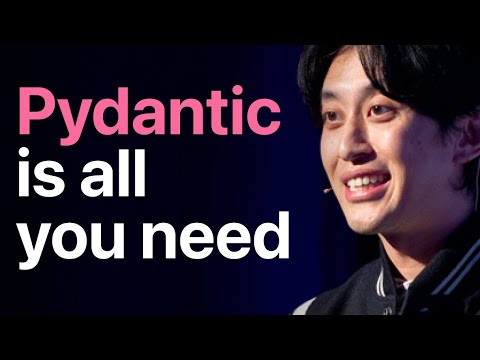
Summary#
# The five-line Instructor pattern:
import instructor, anthropic
from pydantic import BaseModel

client = instructor.from_anthropic(anthropic.Anthropic())  # patch client

class MyModel(BaseModel):                                   # define schema
    field: str

result = client.messages.create(                           # call with model
    model="claude-sonnet-4-6",
    max_tokens=256,
    messages=[{"role": "user", "content": "..."}],
    response_model=MyModel,                                # get typed output
)
# result is a MyModel instance — fully typed, validated, no parsing needed